Please check the bandwidth that you are getting. Disable WiFi before running this Field Test.
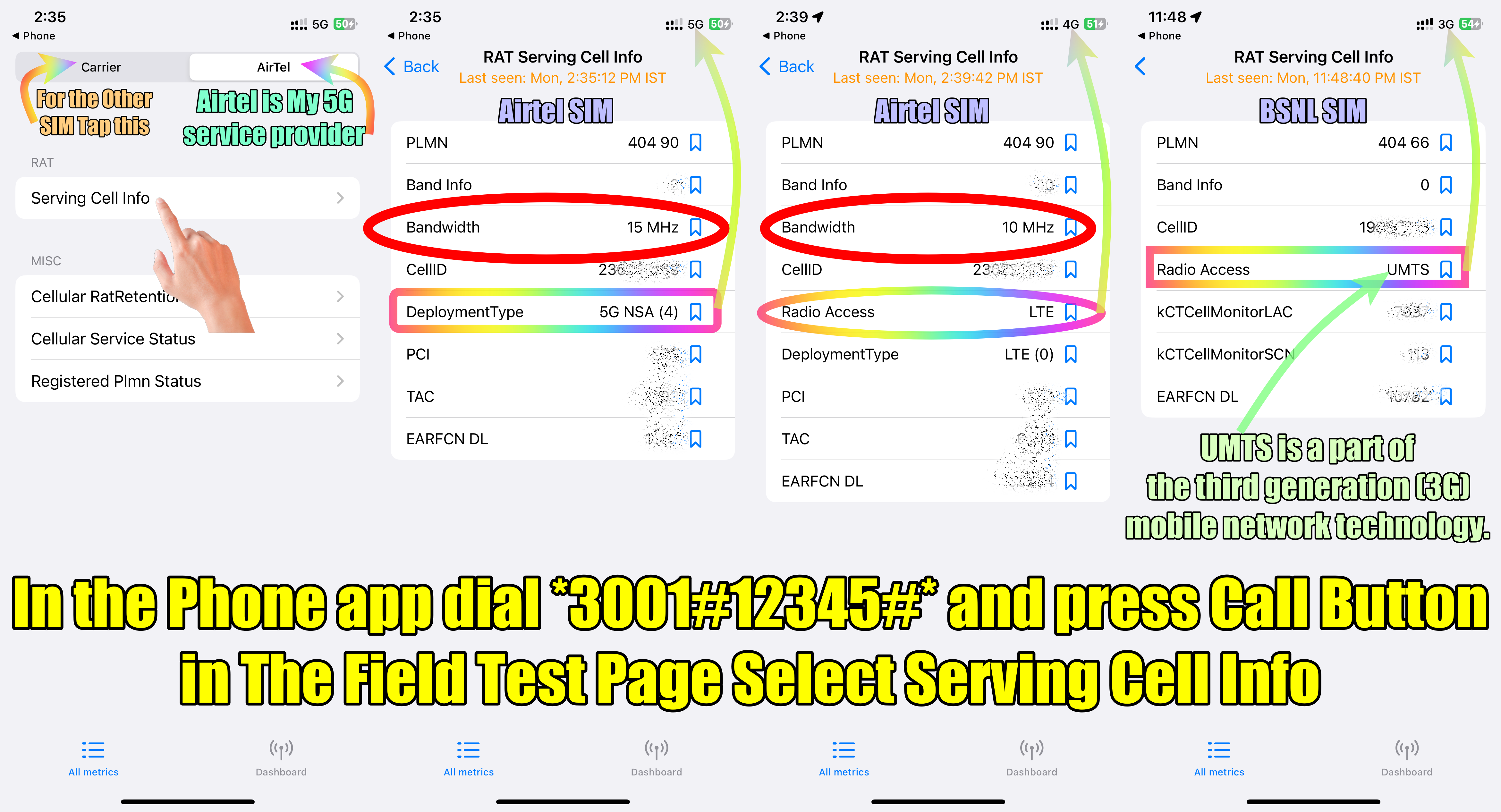
You may check the current LTE band/5G/4G/3G by dialing *3001#12345#* pressing the call button and then selecting the Serving cell info option
Bandwidth on the 2nd and 3rd Screenshots.
See the pic below which is self-explanatory

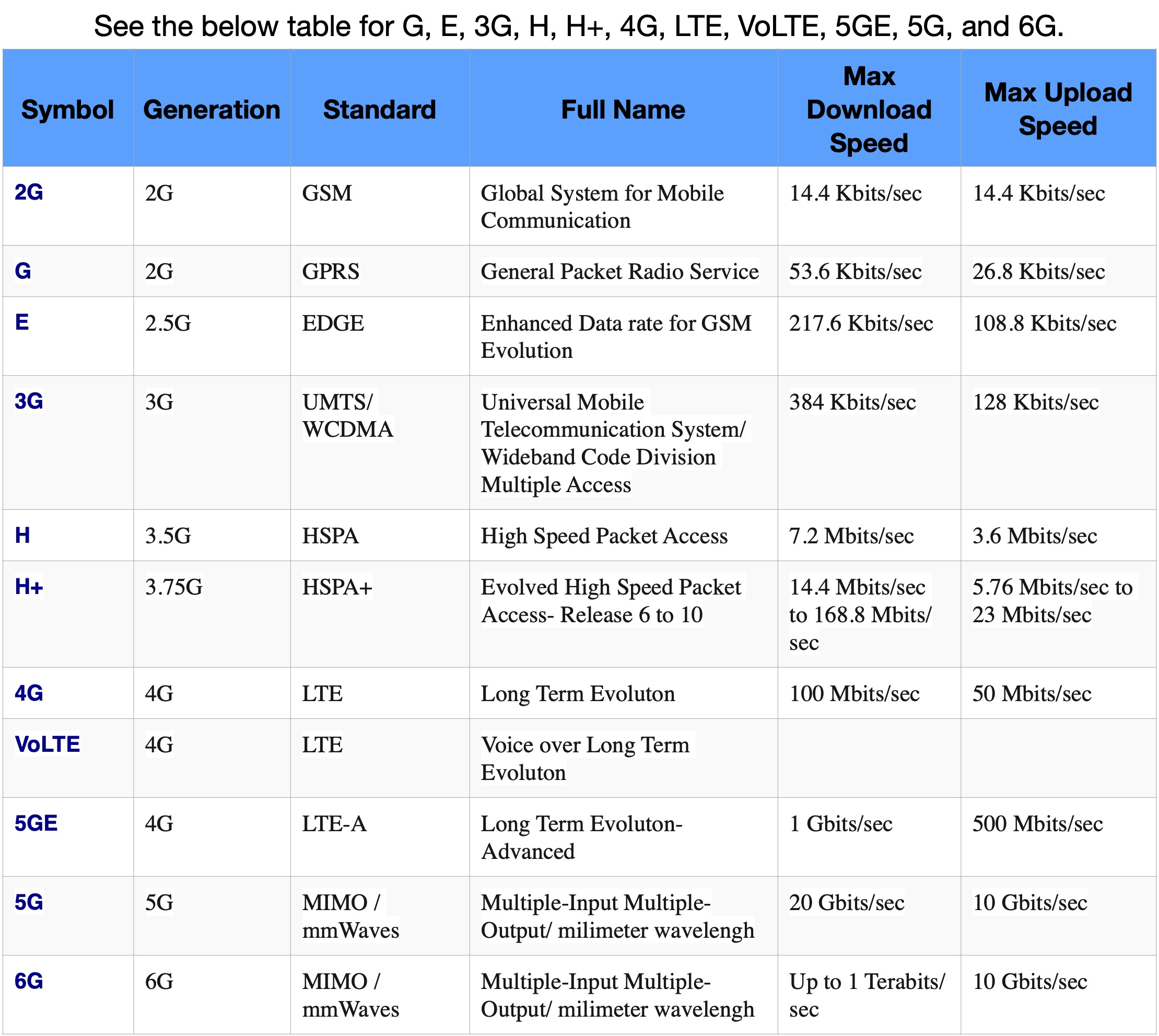
E, 2G, 3G, 4G, LTE, VoLTE, and 5G all are Carrier Specific features. Contact your Carrier (Cellular Service Provider), the agency that issued the SIM / eSIM to you. About the LTE options on your iPhone - Apple Support (IN)
See the Pic below and the explanations thereof
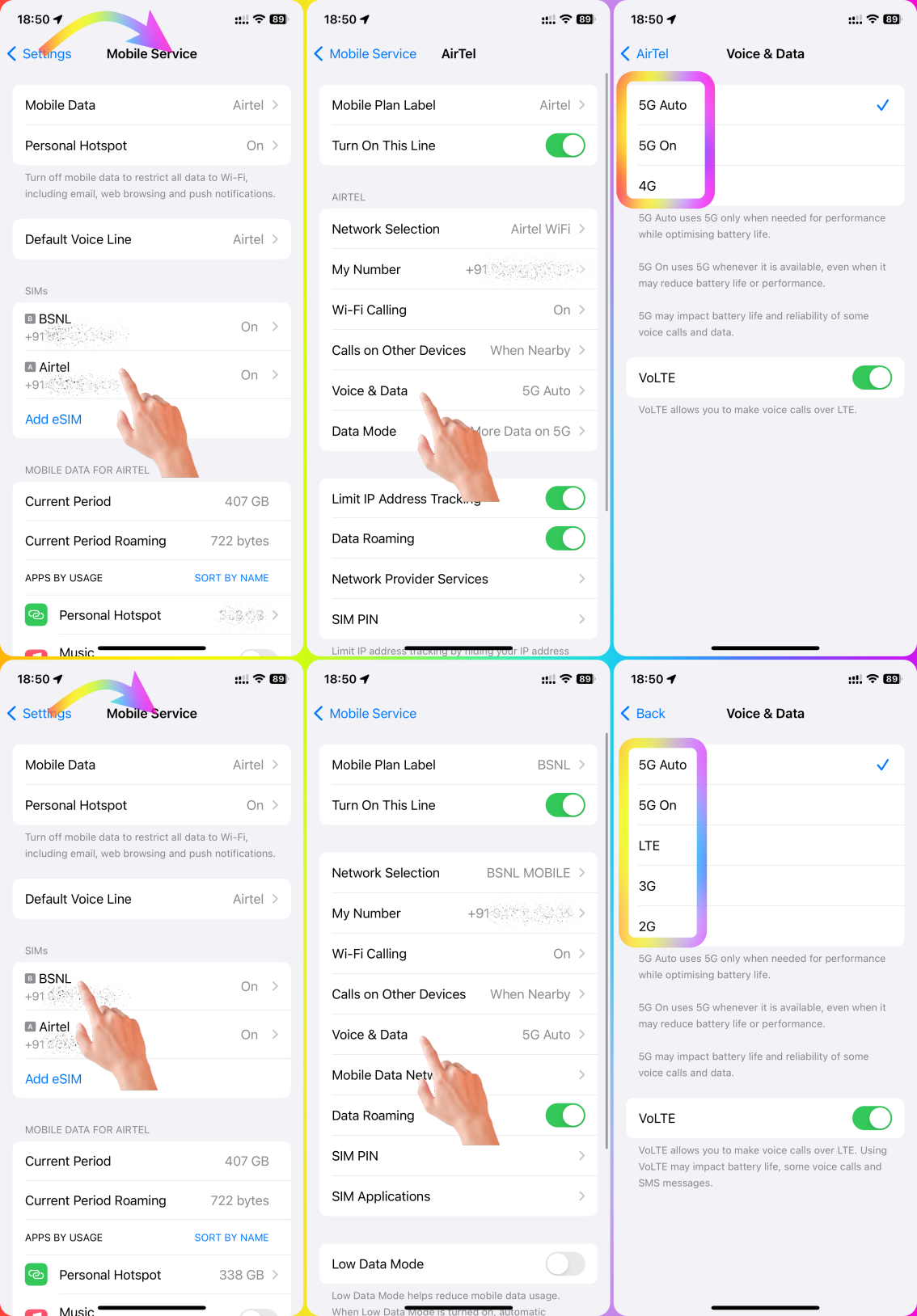
The pic below is self-explanatory
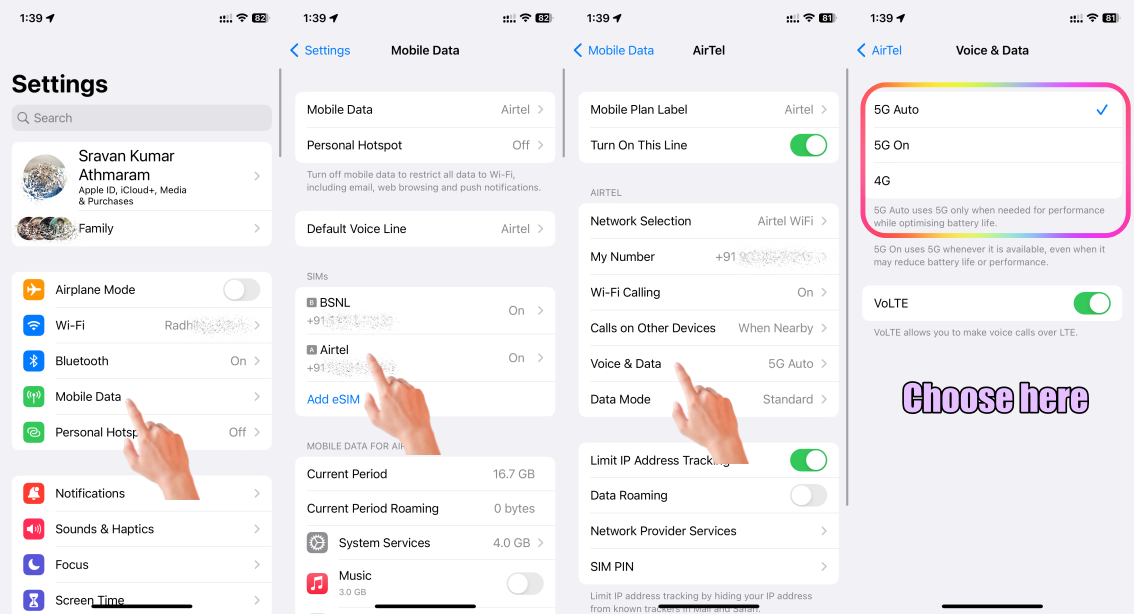
However, iPhone model-specific feature is listed here --> Identify your iPhone model - Apple Support . and tap on "See the Technical Specs for Model "XXXXXX" under each model and Scroll down to the "Cellular and Wireless" section.
Did you tap on the RatRetention?

These terms appear to be related to cellular network parameters and may be associated with a system or device that manages and monitors cellular connectivity. Here's a brief explanation of each term:
- dyn_nr5g_enabling: Dynamic NR (New Radio) 5G enabling, likely indicating the status or configuration of dynamic 5G network support.
- elapsed_ms: Elapsed time in milliseconds, typically used to measure the time that has passed since a specific event or timestamp.
- num_subs: Number of subscribers, indicating the count of active users or devices connected to the network. his refers to the number of active subscriptions on the device. This could be 1 for a single SIM card or more for dual SIM setups.
- ps_pref: Packet Switching preference, referring to the preference or configuration related to packet-switched data services. his indicates the preferred Public Service type (PS) for data, usually either CS (Circuit Switched) or PS (Packet Switched).
- roam_status: Roaming status, indicating whether a device is currently roaming on a network outside its home network.
- scg_ever_configured: Secondary Cell Group ever configured, suggesting whether a secondary cell group has been configured at any point. This indicates whether the device has ever been configured for the Specific Cell Global (SCG) service, which enables location services even without GPS.
- srv_domain: Service domain, specifying the type of services that a device or subscriber can access on the network. This specifies the service domain, such as CS (Circuit Switched) or PS (Packet Switched) for voice and data calls, respectively.
- srv_status: Service status, indicating the current operational status of the cellular service. This reports the service status, which could be values like "in service," "limited service," or "out of service."
- standby_pref: Standby preference, referring to the preferred state of a device when not actively in use or connected to the network. This indicates the preferred standby mode for the device, such as GSM, UMTS, or LTE.
- subs_id: Subscriber ID, a unique identifier associated with a specific subscriber or device on the network.
- sys_mode: System mode, describing the current operating mode of the cellular system (e.g., 2G, 3G, 4G, 5G). This reveals the current Radio Access Technology (RAT) being used, like GSM, UMTS, LTE, or NR (5G).
- ui_nr5g_switch: User Interface 5G switch, indicating user interface controls or settings related to switching between 5G and other network technologies. This shows whether the user has manually enabled or disabled 5G in the user interface.
- upper_layer_indication: Indication from upper layers, likely referring to signals or information received from higher-level protocols or layers in the network stack.
- version: This identifies the version of the software or protocol used for RAT retention information.
These terms are likely used in the context of cellular network management or monitoring software, where understanding and tracking these parameters help ensure effective and reliable cellular connectivity for users and devices.
 User level: Level 1 (4 points)